Experts have called for urgent intervention as rising temperatures and worsening climate conditions continue to affect the Kushtia region.
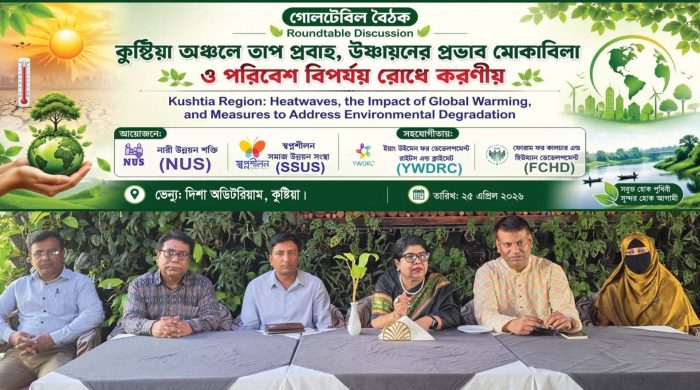
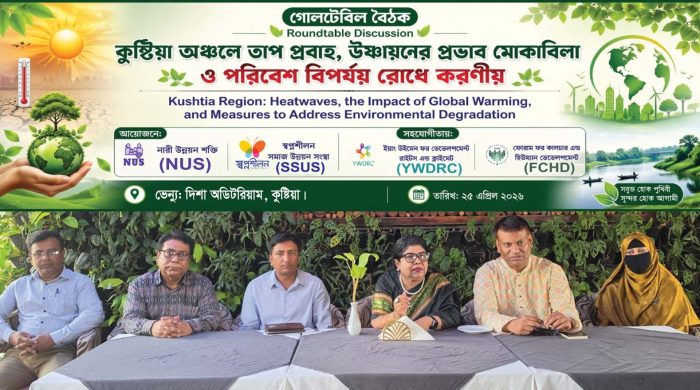
Environmentalists and development specialists made this appeal during a high-level roundtable titled “Heatwaves in Kushtia Region: Impacts of Global Warming and Measures to Prevent Environmental Degradation,” held on Saturday at the DISA Auditorium.
The discussion, jointly organized by Nari Unnayan Shakti (NUS) and the Swapnoshilon Social Development Organization (SSUS), highlighted how prolonged heatwaves are severely disrupting daily life. Participants pointed out that the environmental crisis is being intensified by industrial pollution, reduced river flow, and a significant lack of urban greenery.
Dr. Afroja Parvin, Executive Director of NUS, underscored the social impact of the crisis, noting that women and children are disproportionately affected by climate change. She emphasized the need for gender-sensitive climate policies to ensure vulnerable groups have access to safe drinking water and adequate healthcare.
Focusing on the region’s geography, Nazmul Huda, researcher and founder of SSUS, stated that Kushtia’s ecological well-being is closely linked to the Gorai River. He stressed that stopping river encroachment and restoring navigability through consistent dredging are essential for the region’s sustainability.
Dr. Sultan Muhammad Razzak of the Forum for Culture and Human Development (FCHD) highlighted the importance of initiating a cultural movement to engage young people in environmental conservation efforts.
To address the immediate challenges, participants finalized a 10-point set of recommendations for the government:
1. Implement an emergency heatwave response plan in Kushtia, including adjusted working hours and public awareness campaigns during extreme heat.
2. Ensure the availability of safe drinking water and establish shaded rest areas at key locations, including bus terminals.
3. Accelerate dredging activities in the Gorai River and maintain regular efforts to prevent pollution.
4. Enforce the installation of Effluent Treatment Plants (ETPs) in industries, with strict monitoring and penalties for non-compliance.
5. Take decisive action against illegal brick kilns and other major sources of emissions.
6. Expand tree plantation programs across Kushtia city and its upazilas, particularly along roadsides.
7. Strengthen municipal waste management systems and improve plastic control measures.
8. Support farmers in adopting low-chemical, water-efficient agricultural practices and enhance awareness.
9. Introduce educational programs on heatwaves and environmental protection in schools, colleges, and universities.
10. Ensure accountability in the enforcement of environmental laws by local authorities.